
Slowmads
A More Sustainable Way to Live on the Road

There’s a certain freedom that comes with living on the road. But after enough time traveling, you begin to realize that freedom doesn’t always mean movement.
Sometimes it means finding somewhere you love, putting down temporary roots, and giving yourself permission to stay for a while.
Slowmadding is about finding a more sustainable rhythm of nomadic living. One shaped by the seasons, comfortable places to call home for a while, meaningful routines, and opportunities for community that develop naturally over time.
It’s not about traveling less. It’s about making more room to enjoy the life you’re living along the way.
Our Approach to the 'Slowmad-Life' 🚐
Moving With the Seasons
Following comfortable spring and fall conditions can make vanlife easier and more sustainable versus sticking to hard dates and travel schedules.
The Value of Putting Down Temporary Roots
Staying somewhere for one to three months gives us time to establish familiar routines and create more mental space for creative work.
Finding the Right Places
With every migration we scout peaceful places, build landowner relationships, and find more places we could see ourselves living in for a month or two or five.
Letting Community Happen Naturally
Small groups, personal space, and connections that grow slowly without social pressure.
Making the Lifestyle Affordable
Longer stay deals and shared private-land arrangements help make life on the road sustainable.
Replace the Fear of Missing Out With the Freedom to Return
Return to familiar regions and faces without the pressure to experience everything right now.


01
Moving With the Seasons
Weather surfing
One of the biggest advantages of living nomadically is the ability to choose your environment.
Rather than constantly chasing destinations, we prefer to follow the seasons. We sometimes call it weather surfing: migrating toward comfortable spring and fall conditions and trying to avoid the extremes of summer and winter.
A recurring seasonal rhythm
This creates a more natural migration pattern, moving between familiar regions as conditions change throughout the year.
Weather isn’t always predictable, and every location comes with its own challenges. But learning to move with nature’s rhythms rather than against them can make life on the road considerably more comfortable.
It also changes how you think about travel. Instead of planning every stop around something you need to see, you begin looking for places where the conditions are right to simply live.
02
The Value of Putting Down Temporary Roots
Less decision fatigue
Constant travel requires constant decision-making.
Where are we going next? Where will we park? What’s the weather going to do? Where can we get water, dispose of trash, or find somewhere safe to stay?
Over time, those decisions can become exhausting, even when you genuinely love the nomadic lifestyle.
One to three months at home
We’ve found that staying somewhere for one to three months often creates an entirely different experience.
You begin to feel at home. You discover familiar walking routes, establish routines, and gradually settle into the surrounding environment.
Room for creative work
For creative work, this can be particularly valuable. Instead of spending so much mental energy managing the logistics of travel, you can redirect that energy toward music, writing, work, personal projects, or simply enjoying your daily life.
Traveling with cats has made the benefits of this stability even more apparent for us, but the value of slowing down extends well beyond traveling with pets.
The freedom to stay
Putting down temporary roots doesn’t mean giving up your freedom.
It means enjoying the freedom to stay.
03
Finding the Right Places
The challenge of staying longer
One of the greatest challenges of slowmadding is finding somewhere you can actually stay long enough to enjoy it.
Many public campgrounds and dispersed camping areas have stay limits of around two weeks, and constantly rotating between locations can undermine the stability you’re trying to establish.
Private land can offer more flexibility, privacy, and peace of mind, but it often comes with a much higher price tag.
Scouting and relationships
Over the last couple of years, we’ve spent considerable time scouting properties, returning to promising locations, working with landowners, and gradually developing a better understanding of what makes a place suitable for extended nomadic living.
There are some practical things we look for.
Essentials, safety & practical comforts
A suitable property needs to accommodate a small group of vehicles with safe access, ideally without requiring four-wheel drive. Bathrooms are essential, while amenities like potable water, trash service, solar exposure, and showers can make extended stays much more comfortable.
Nature on your doorstep
But amenities are only part of the equation.
We also look for peaceful surroundings, enough room for everyone to have their own space, and opportunities to step directly into nature.
Being able to walk from camp into the forest, onto a trail, or toward a nearby river without needing to drive somewhere is especially valuable to us.
Space to gather
Ideally, there’s also room for a shared gathering space where people can cook, play games, or spend time together when they feel like it.
Not every location will have everything. Finding the right balance is an ongoing process of discovery, experimentation, and building relationships with people willing to share their land.




04
Letting Community Happen Naturally
Small groups, on your terms
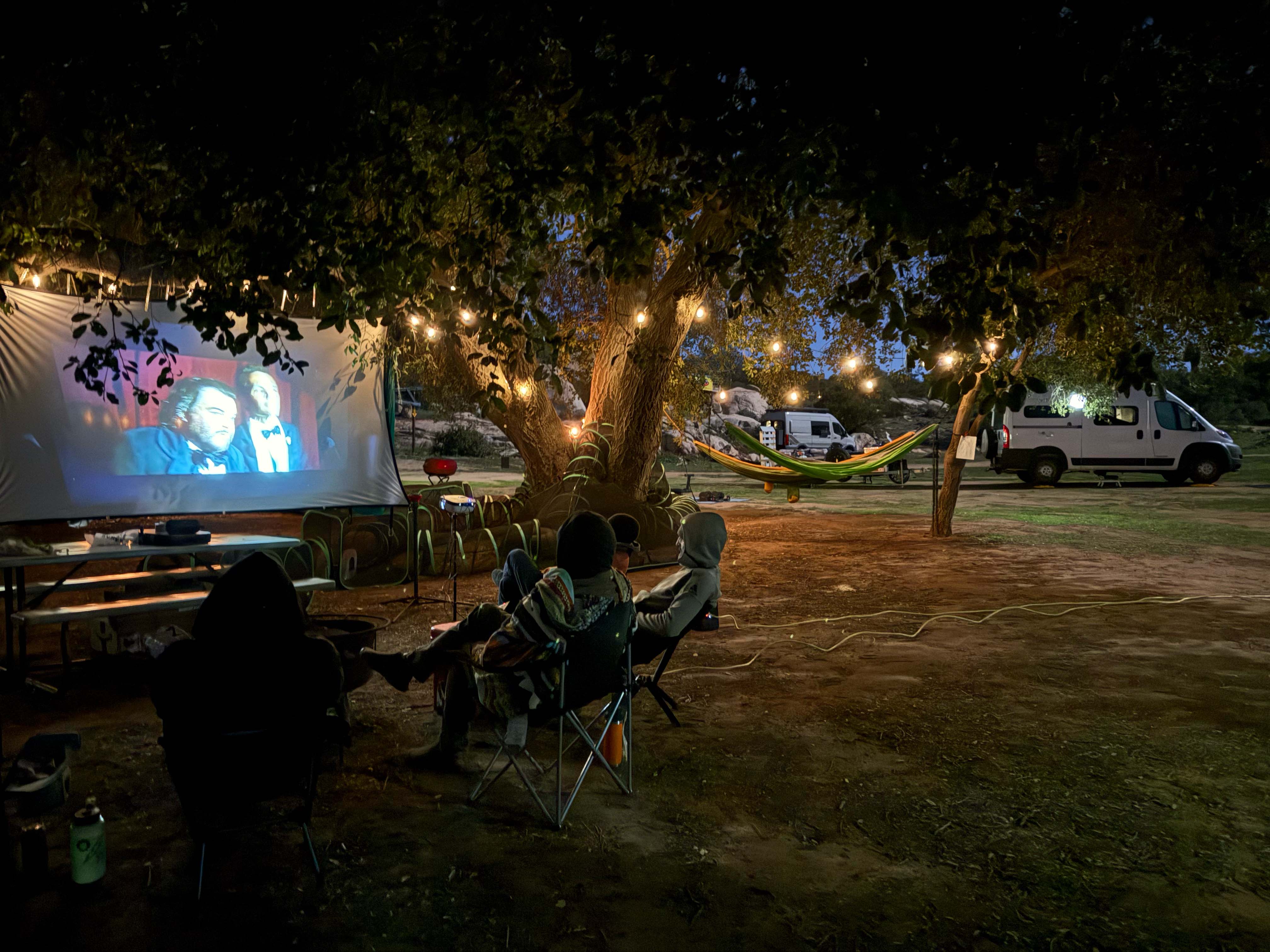
For us, slowmadding isn’t just about the places we stay. It’s also about creating opportunities for meaningful community without the social pressure that can sometimes come with larger van life gatherings.
We’re naturally introverted, and we’ve found that smaller groups tend to create a more comfortable and sustainable social environment.
Often, somewhere around three to ten vehicles feels just right.
But community doesn’t mean everyone needs to participate in everything.
Solitude is welcome
We’ve had people stay with us for an entire week and spend nearly all their time inside their vans.
And that’s completely okay.
Everyone has their own routines, responsibilities, moods, and social energy. Sometimes people want company. Sometimes they want solitude.
No single moment defines a community
If someone joins for just a day or two, they might arrive during an especially social moment, or they might find that everyone is enjoying their own quiet time.
Neither experience defines the community.
Familiarity takes time
We’ve found that meaningful connections often develop through time and familiarity rather than organized activities or expectations.
Maybe one afternoon several people feel like going for a hike, sharing dinner, or playing disc golf. Another day, everyone might be working independently or enjoying their own space.
By spending more time around one another, those opportunities can emerge naturally.
Sustainable community means leaving room for everyone to be human.
Always invited, never expected.
A Moving Neighborhood
One way we like to think about Pop-Up Nomads is as a moving neighborhood.
Instead of building a community around one permanent location, we’re developing a series of temporary home bases that migrate with the seasons.
Places where nomads can arrive, settle in, establish their routines, and enjoy a little familiarity along the way.
People can come and go independently. Some might stay a few days, while others remain for weeks or months.
Over time, you begin recognizing the same faces. You build friendships and trust, reconnect with people somewhere else down the road, and gradually meet newcomers who share similar values.
It doesn’t always happen in the same place, and it doesn’t require everyone to travel together.
The neighborhood changes as people arrive and depart, but there’s still a sense of continuity.
A little temporary home base that moves around. Somewhere you can feel at home without having to stay forever.
The neighborhood might change locations, but the feeling of home can travel with it.
05
Making the Lifestyle Affordable
Why nightly costs matter
Finding beautiful places with the right amenities is one challenge. Finding them at a price that allows you to comfortably stay for weeks or months is another.
It’s not unusual for private camping accommodations to cost $50 or $60 per night, sometimes considerably more.
Those prices can make sense for short vacations, but they aren’t always sustainable for people who are living on the road full-time.
It’s difficult to settle in and stop worrying about the next destination when every additional night carries a significant expense.
Making longer stays possible
That’s why affordability has become such an important part of what we’re trying to create.
By building relationships with private landowners and developing arrangements for small groups and longer stays, we try to keep many of our pop-ups around $10 to $15 per vehicle per night whenever possible.
The specific arrangements, amenities, and costs vary between locations.
Sharing costs, not selling vacations
The intention isn’t to create a conventional campground business. It’s to make it easier for people to share the costs of peaceful places and spend enough time there to actually enjoy them.
When a place becomes financially sustainable, staying longer becomes a realistic option rather than a luxury.
06
Replace the Fear of Missing Out With the Freedom to Return
You don’t have to do it all
One of the most liberating things about slowmadding is realizing you don’t have to experience everything right now.
You don’t have to take every hike, explore every nearby town, join every gathering, or fill every day with something memorable.
Familiar places, another season
When you approach travel as a recurring seasonal rhythm, there’s a good chance you’ll return to the same regions again.
Maybe you’ll take that hike next time. Maybe you’ll explore that little town next season. Maybe you’ll reconnect with someone you met months earlier in a completely different place.
There’s less urgency to squeeze everything into a single visit.
Relationships without a deadline
And that freedom extends to the way we connect with people.
You don’t have to become close friends with someone over a weekend. Relationships can develop slowly through repeated encounters, shared experiences, and the simple familiarity of seeing one another again.
Slowmadding creates room for life to unfold without constantly feeling like you’re missing something.
The freedom to return changes the way you experience the journey.

Making Slowmadding Possible
Pop-Up Nomads is our ongoing effort to put these ideas into practice.
We’re continuing to scout locations, develop relationships with landowners, and create small, affordable places where nomads can put down temporary roots and experience community on their own terms.
We’re still experimenting, learning, and refining what works.
But the intention remains the same: to make nomadic living feel less like a never-ending journey between destinations and more like a sustainable way of life.
A life with room for solitude, creativity, adventure, familiar faces, and a little sense of home wherever the seasons take us.
Camp. Co-Work. Co-Exist.
Always invited, never expected.
About Pop-Up Nomads
What’s Up Next


Pop-Up Events Schedule
